Aluminum louvered pergola finds broad applications in both residential and commercial outdoor projects due to their stable structural performance, exact control of light, and durability against environmental stress. Aluminum offers more predictable structural behavior than that of wood or steel under continuous exposure, making it the most efficient material for modern pergola systems.
The material is resistant to rust, swelling, decay, or water absorption, and it maintains its size and shape under thermal and humidity fluctuations. In fact, the material won’t be corroded even in coastal or rainy areas as it forms a protective layer of oxide. Besides, powder coating provides additional protection and ensures the colors remain consistent for years. This combination makes aluminum the most practical option for a structure expected to stay functional with minimal maintenance.
Aluminum Benefits
The material doesn’t require staining, sealing, or chemical treatments. Aluminum components are fabricated with tight tolerances for ease of assembly and reliable fixture alignment. Hardware remains accessible for periodic checks, while the frame maintains integrity without warping or deformation. All these mechanical advantages contribute to reduced service requirements and increased operational lifespan.
Innovative Louvers
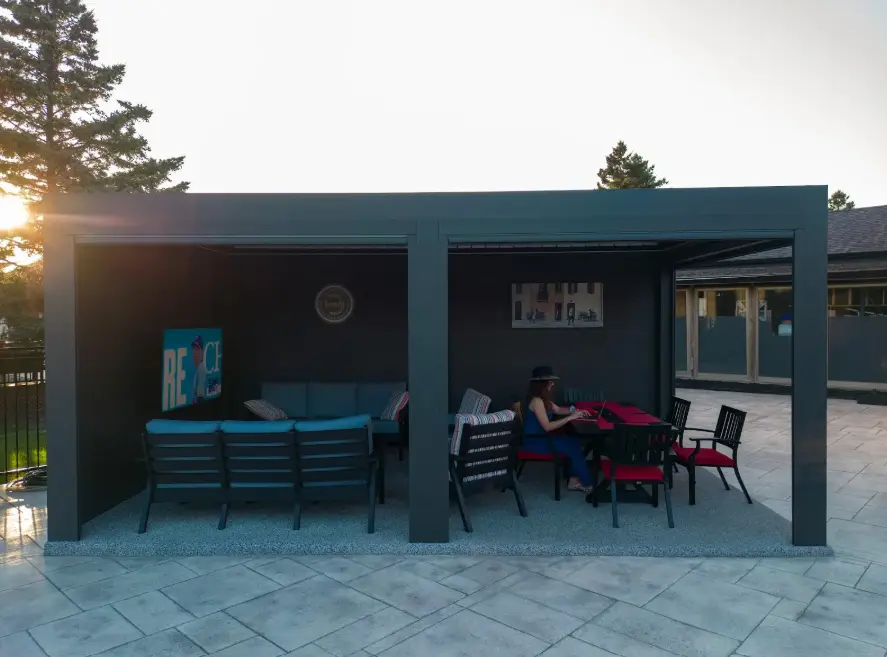
The louver system is the principal operating feature of the pergola. The adjustable blades pivot to control sunlight, airflow, and shade distribution. When closed, properly engineered louvers interlock to redirect rainwater into integrated gutters, keeping the space below dry. When opened, they create ventilation and reduce heat buildup. Fast adjustment without physical effort comes with manual or motorized controls. This mechanism allows one structure to support multiple lighting and climate conditions throughout the day.
Design & Installation Options
Aluminum construction supports a wide range of installation formats suitable for both small and large areas. Before selecting a configuration, determine the structure’s functional purpose, available space, and required load capacity. The most common layout types include:
- Free-standing configurations that operate independently from the building.
- Wall-mounted systems are attached directly to existing structures for integrated coverage.
- Custom modular layouts tailored for extended patios, irregular surfaces, or multi-zone areas.
These can include lighting, screens, drainage elements, heaters, or automation modules. The precision of aluminum components allows designers to maintain consistent geometry even complex layouts.
Durability & Care
Although aluminum pergolas are inherently durable, several maintenance steps further extend their lifespan. Rinsing the frame removes dust and debris that could obstruct drainage channels. Cleaning louvers and checking pivot points ensures smooth, continuous motion and reduced mechanical strain. For mechanical units, regular inspection of electrical wires and connections will ensure uninterrupted performance. The use of gentle, non-abrasive cleaning agents helps remove dirt without damaging the coating.
The aluminum louvered pergola provides long-lasting structural support, precision environmental control, and design flexibility. Its resistance to corrosion, coupled with predictable mechanical behavior and reduced service requirements, makes it a dependable choice for outdoor applications where durability and performance consistency are needed due to constant exposure to the elements.
About the Author