Organizations across finance, telecommunications, and public services handle thousands of identity documents daily. Whether during customer onboarding, employee verification, or secure access control, the risk of forged or altered IDs is real. Manual document checks can miss subtle manipulations, exposing companies to compliance issues and fraud.
To counter these risks, verification systems increasingly rely on MRZ scanners and passive authentication methods. Together, these technologies ensure that identity documents are genuine, untampered, and verifiable within seconds — without adding friction to user experience.

What MRZ Scanners Do in Digital Identity Verification
Every passport, visa, or government-issued ID includes a Machine Readable Zone (MRZ) — a standardized line of characters that encodes the document’s essential data. It allows automated systems to extract key information quickly and accurately.
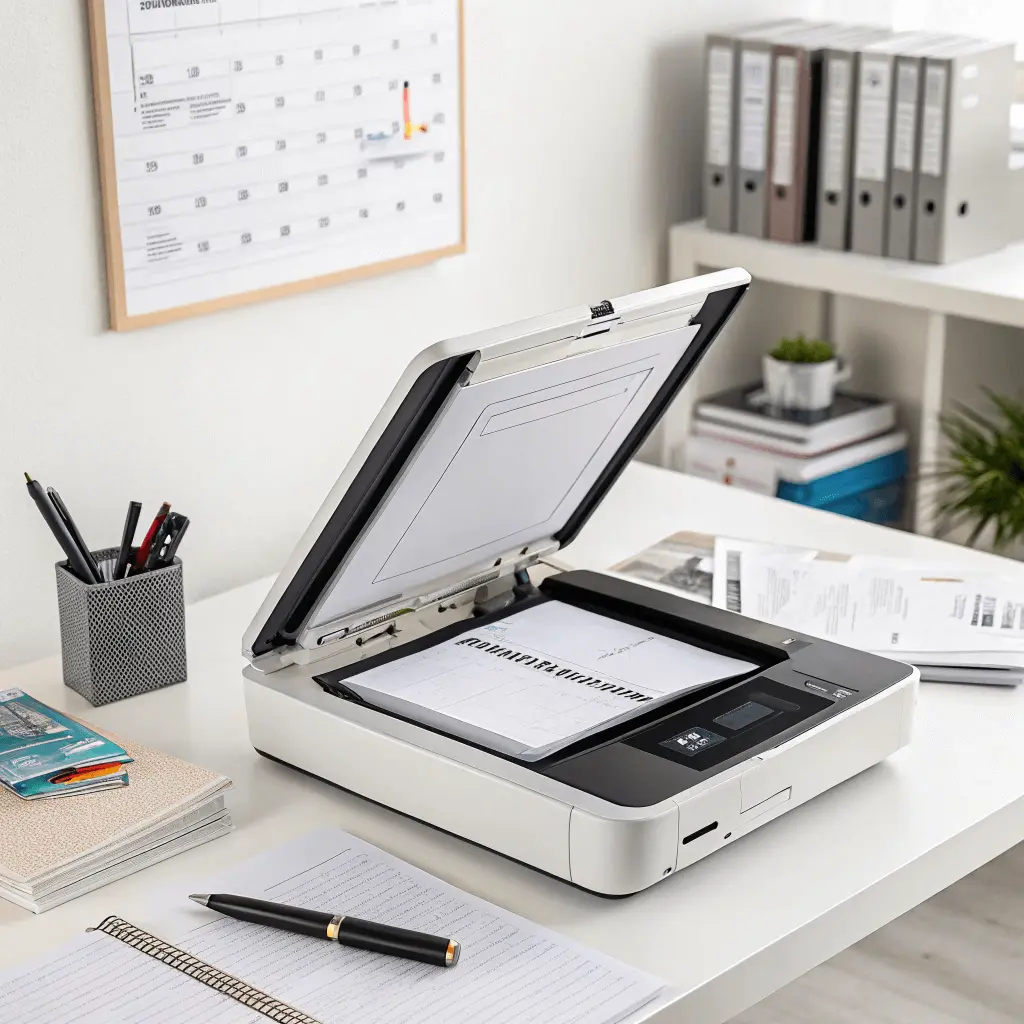
A MRZ Scanner reads these lines using optical character recognition (OCR) and compares the extracted data against other information sources, such as the chip in an e-document or an institution’s verification database. This step forms the backbone of any secure document-checking process.
Advantages of using MRZ scanners include:
- Consistency and speed. Scanning takes seconds and eliminates manual input errors.
- Accurate data capture. OCR ensures precise extraction of names, document numbers, and expiry dates.
- Integration with digital platforms. MRZ scanners can connect directly with eKYC, access management, or fraud detection systems.
By combining fast data capture with structured verification logic, MRZ scanners reduce the margin for error and support automated decision-making in real time.

Passive Authentication and How It Protects Against Document Tampering
While MRZ scanning verifies what is printed on the document, passive authentication confirms whether the digital data inside it has remained intact since issuance. This process checks the integrity of the cryptographic signature stored in the chip of an e-passport, e-ID, or residence card.
The system compares this signature with the issuing authority’s trusted public key. If they match, the document’s digital content is proven authentic. Unlike active authentication, passive authentication doesn’t require any interaction from the chip— it works silently in the background, making it ideal for automated or offline workflows.
Typical steps in passive authentication:
- Data extraction. The system reads signed information from the document’s chip.
- Signature validation. It verifies the digital signature using official certificates from trusted sources.
- Integrity verification. If the data matches and the signature is valid, the document passes the authenticity check.
This method ensures that even if someone copies or modifies a document chip, the forgery will be immediately detected.
Why Combining MRZ Scanning and Passive Authentication Strengthens Security
Both MRZ scanning and passive authentication work best when used together. The MRZ provides a physical data reference, while passive authentication guarantees the digital integrity of the document. Comparing the two helps detect inconsistencies and expose fraudulent attempts.
Combined use provides several advantages:
- Two-level validation. Cross-checking physical MRZ data with digital chip content identifies tampering attempts.
- Fraud prevention. Altered or cloned chips fail digital signature validation, blocking fake documents instantly.
- Faster automated processing. Systems can approve genuine documents automatically, sending only suspicious ones for manual review.
This layered approach is now used not only in airports but also in banks, telecoms, age-restricted platforms, and eGovernment portals where verifying true identity is critical.
Types of Document Fraud Prevented by MRZ Scanners and Passive Authentication
Fraudsters employ increasingly sophisticated methods to forge IDs, making automated verification indispensable. MRZ and authentication technologies detect manipulations that are often invisible to the human eye.
Most common fraud types detected include:
- Altered data fields. Printed text modified while the MRZ remains unchanged, creating mismatched information.
- Chip cloning. Copying a genuine chip and embedding it in a fake document, which fails passive authentication.
- Substitution fraud. Replacing a photo or data page without updating the cryptographic signature.
- Template imitation. Documents designed to look real but missing valid MRZ encoding or correct checksum values.
Each detection strengthens the system’s ability to prevent unauthorized access, identity theft, and regulatory violations.

Integrating MRZ Scanners and Authentication into Enterprise Workflows
Modern verification systems integrate MRZ scanning and passive authentication directly into enterprise platforms. These integrations automate document checks during user registration, account verification, and employee onboarding.
Key integration areas include:
- Financial onboarding systems. Banks verify ID authenticity before approving accounts or loans.
- Access management platforms. Corporations validate employee badges or eIDs at entry points.
- Telecom and utility sign-ups. Customer identity checks prevent SIM swap or service fraud.
- Government e-services. Public portals confirm applicants’ identities automatically without manual intervention.
Because both MRZ and authentication checks can run offline or on-premise, they support privacy-by-design architectures that align with GDPR, CCPA, and other global data protection frameworks.
Benefits of Using MRZ Scanners and Passive Authentication in Business Environments
For organizations, these technologies deliver tangible operational and compliance benefits beyond security.
Main benefits include:
- Reduced risk exposure. Automated checks prevent costly fraud incidents and data leaks.
- Faster onboarding. Customers or employees can be verified within seconds, improving experience without compromising safety.
- Audit-ready transparency. Every verification step is logged, simplifying compliance reporting.
- Scalable deployment. On-premise or cloud-based SDKs make it easy to add secure document verification to any system.
As regulatory requirements tighten worldwide, integrating reliable document authentication tools becomes a strategic advantage rather than an optional feature.
The Future of Document Authentication
The next generation of document verification will go beyond MRZ and chip validation. Artificial intelligence, image forensics, and multispectral analysis are already being used to detect subtle anomalies invisible to traditional scanners.
Emerging trends include:
- AI-based fraud detection. Algorithms learn to recognize unusual printing or texture patterns.
- NFC and optical fusion. Combining chip reading with visual inspection for deeper authenticity checks.
- Decentralized validation. Blockchain-based certificate storage for cross-border verification without central databases.
These advancements will complement MRZ scanners and passive authentication, giving organizations stronger, smarter, and more adaptive tools to maintain trust in identity systems.
Conclusion: Trust Begins with Document Integrity
Every identity verification process begins with a document. Ensuring that this document is authentic, unaltered, and verifiable is the foundation of digital trust. MRZ scanners and passive authentication together create this foundation — automating validation, reducing fraud, and supporting compliance across industries.
For enterprises that depend on secure onboarding and regulatory reliability, these technologies offer a straightforward way to strengthen defenses and protect both users and business integrity from document-based fraud.
About the Author